



In short
A VPN in the Russian Federation can encrypt the connection between your device and a VPN server and can give you an IP address in another country. It cannot guarantee access: Russian authorities actively block VPN services, rules change quickly, and a particular website may still reject VPN traffic.
Key takeaways
- As of October 2026, ordinary VPN use is not an outright offense in Russia, but rules target noncompliant VPN providers, VPN advertising, and some actions taken through a VPN.
- A VPN connection can fail in Russia because blocking may target provider infrastructure, IP ranges, ports, or recognizable VPN traffic patterns.
- Getting a Russian IP address from abroad requires connecting to a server located in Russia, which is a different need from using a VPN while physically in Russia.
- A VPN reduces what a local network can read on the route between your device and the VPN server, but it does not make logged-in accounts or unsafe online behavior anonymous.
- Check a provider’s live location list and test the specific service you need before depending on a VPN for travel, work, banking, or communications.
Contents
- Is there a VPN that works in Russia?
- Is using a VPN illegal in Russia?
- How do you get a Russia VPN?
- Why can a VPN stop working in Russia?
- How private is a VPN connection in the Russian Federation?
- Frequently asked questions
- What should you do before you rely on a VPN?
A VPN is useful only when its limits are clear. Start by deciding which problem you are solving: protecting traffic on the network you are using, reaching services from another country, or accessing a Russian online service from abroad.
Is there a VPN that works in Russia?
Some VPN connections can work in Russia, but no provider can honestly promise that a connection will work on every Russian network or remain available indefinitely. Russia’s internet controls include VPN blocking and targeted protocol restrictions, so a connection that works today can fail after a network or infrastructure change. Freedom House’s 2025 Russia report documented expanded VPN blocking and the use of deep packet inspection-related controls.
A VPN can still have a straightforward privacy use. It creates an encrypted tunnel from your device to a VPN server, which can help prevent people on the same Wi-Fi network from reading traffic in transit. Learn more about how VPN encryption works, including where that protection begins and ends.
A VPN can also change the IP address websites see. That can help where a service is available only in a particular location, but access is never guaranteed. A website may block known VPN IP addresses, require local identity verification, or apply its own security rules. For a broader explanation of network, workplace, and regional blocks, see unblock websites, explained.
A VPN in Russia is best treated as a privacy and connectivity tool with uncertain availability, not as a guaranteed route around every restriction.
Is using a VPN illegal in Russia?
As of October 2026, simply using a VPN is not an outright criminal offense for an ordinary user, but Russia has substantial restrictions that affect VPN services and certain online activity. The rules and enforcement environment are complicated enough that this is not a substitute for advice from a qualified lawyer.
Russian authorities can restrict VPN services that do not meet the country’s requirements. In an April 27, 2026 letter, Russia’s Ministry of Digital Development said Roskomnadzor could limit access to VPN services that do not comply with the law. The ministry letter also described continuing measures against noncompliant VPN services.
The legal risk is not limited to whether an app is installed on a phone. Amendments effective from September 2025 introduced penalties related to VPN advertising and imposed obligations on service operators; a separate 2025 measure made using a VPN an aggravating circumstance when committing certain crimes. The published legal summaries and Human Rights Watch’s 2026 reporting describe the distinction.
If an activity, search, or website could create legal risk without a VPN, adding a VPN does not make that risk disappear. Check current local law before traveling or acting on sensitive information.
How do you get a Russia VPN?
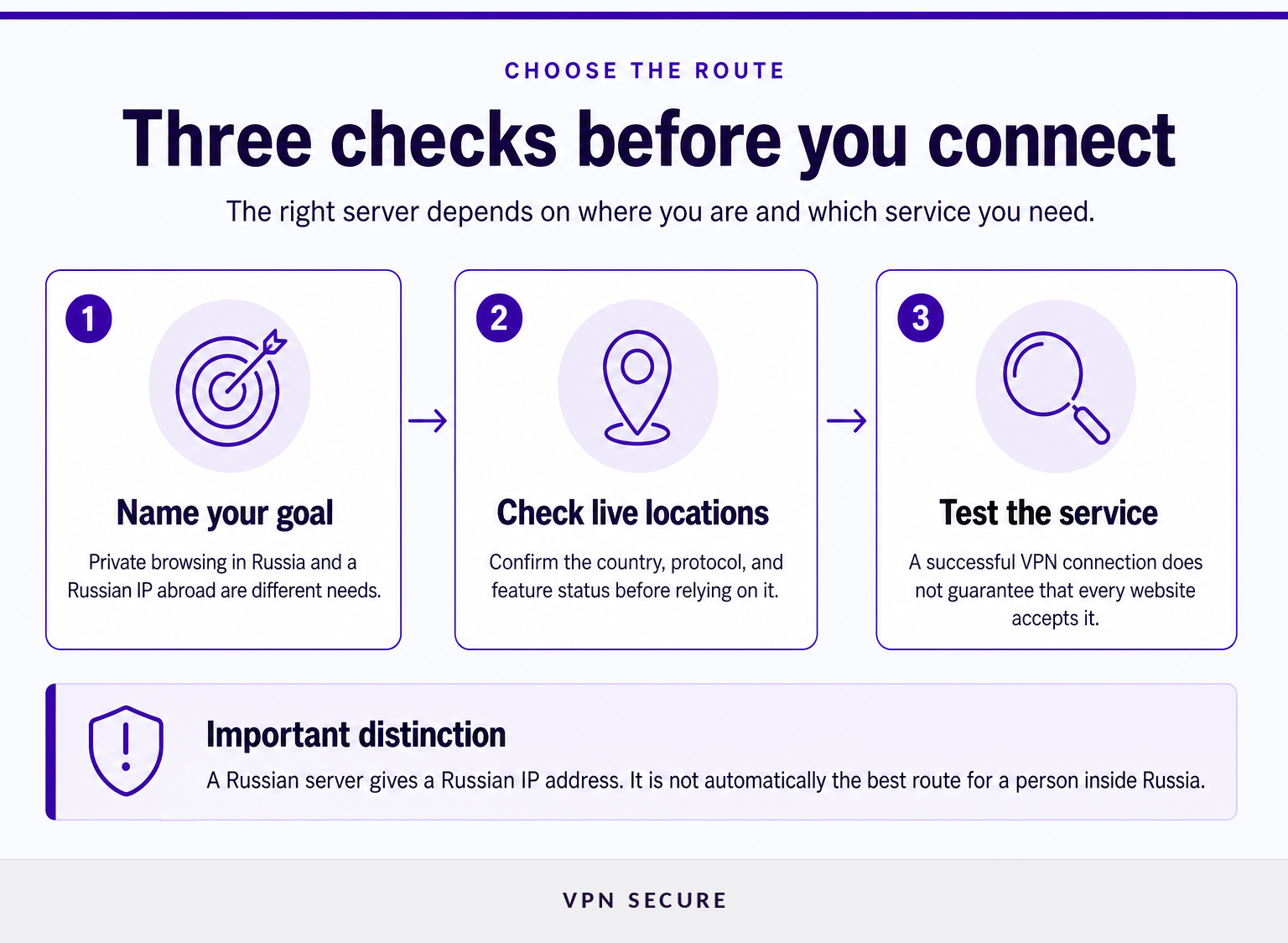
To get a Russian IP address, connect from abroad to a VPN server physically located in Russia. To protect a connection while you are inside Russia, choose a server based on the service you need to reach and the connection options that are currently available, which may be outside Russia.
Choose the route that matches your goal
If you are outside Russia and need a Russian-facing service, select a Russian server. This gives the destination website a Russian IP address, but it does not guarantee that the service will accept VPN traffic.
If you are inside Russia and want an encrypted connection to an international service, selecting a nearby non-Russian server may make more sense. The right choice depends on network performance, the service’s own location rules, and whether the connection can be established at all.
Install and verify before you need it
Install the official app and sign in before a trip, rather than relying on an app store or download page being accessible later. Keep the app updated, and avoid copying configuration files or credentials from forums, shared drives, or unknown messages.
VPN Secure’s current location directory lists a Saint Petersburg server, RU #01, with WireGuard and OpenVPN support. The same directory does not list Stealth Mode for that Russian server, so do not assume every server offers every feature. Review available VPN locations immediately before connecting because location availability and capabilities can change.
Test the exact service that matters
Connect, then open the site or app you actually need. Test normal browsing as well as any work, communication, or account login flow that matters to you. If a service rejects the VPN connection, disconnecting or choosing a different legitimate location may show whether the issue is the VPN IP, the service’s regional rule, or a separate account requirement.
VPN Secure documents obfuscation as Stealth VPN for supported Windows, macOS, and Linux configurations. Review the current Stealth VPN features before treating that option as available on a particular device or server.
For readers who need a Russian IP address, the useful first step is confirming the live server list rather than assuming that a country location exists.
Why can a VPN stop working in Russia?

A VPN can stop working because a network can block the provider’s IP addresses, restrict traffic on a port, or identify patterns associated with a VPN protocol. A failed connection does not prove that your account is faulty, and switching servers does not guarantee a lasting fix.
Russian restrictions can affect individual providers differently. Freedom House reported that Russia’s controls have included VPN blocking and targeted protocol blocking, while Human Rights Watch reported further disruptions and infrastructure-level blocking in 2026. Those reports explain why a recommendation from another traveler, city, or mobile carrier may not match your own result. Freedom House’s 2025 country report and Human Rights Watch’s September 2026 report are useful context, not a promise about a specific connection.
Start with basic checks: confirm that ordinary internet access works, update the VPN app, check the provider’s live status information, and try the supported connection settings documented by the provider. Do not repeatedly enter credentials into unfamiliar websites or install unofficial “fix” applications during a connection problem.
In Russia, a connection failure is often a changing network condition, so test calmly and use only provider-supported software and settings.
How private is a VPN connection in the Russian Federation?
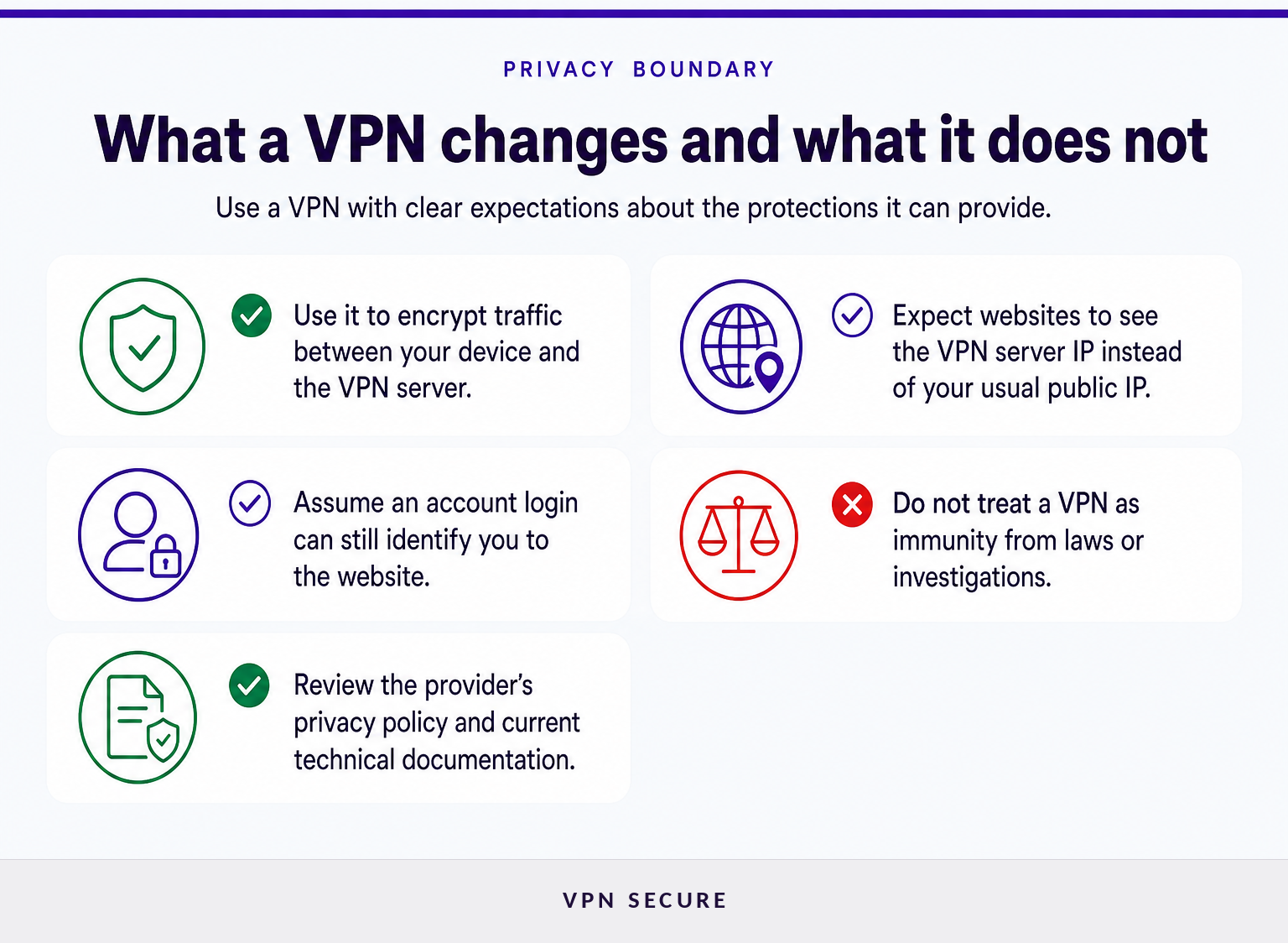
A VPN encrypts traffic between your device and the VPN server, reducing what a local Wi-Fi operator or internet provider can read on that part of the route. A VPN does not make you anonymous to websites where you sign in, and it does not remove legal, account, device, or browser-level identifiers.
When a VPN connection is active, the local network can usually still see that your device is communicating with a VPN server and may observe connection timing or data volume. The VPN provider handles traffic as it exits the tunnel, which is why the provider’s privacy policy, technical documentation, and operating practices matter.
Destination websites can still recognize you through your account login, cookies, browser fingerprinting, payment details, or information you submit. HTTPS also has a separate role: it protects traffic between your browser and a website, while the VPN protects the device-to-server leg.
Use a VPN to reduce exposure on the connection, especially on public Wi-Fi, but keep using strong account security, software updates, and careful judgment about what you share.
Frequently asked questions
Is there a VPN that works in Russia?
Some VPN services may connect on particular Russian networks, but availability is not guaranteed and can change without notice. Russia has blocked VPN services and can disrupt recognizable VPN traffic, so test a provider on the network you will actually use. A successful connection does not guarantee access to every website or app.
Can the FBI track a VPN?
A VPN can reduce what a local network or internet provider can see about traffic between your device and the VPN server, but it does not make someone untraceable. Investigations can rely on account records, devices, financial trails, destination websites, or other evidence. A VPN should never be treated as protection from lawful investigation.
Is using VPN illegal in Russia?
As of October 2026, ordinary VPN use is not an outright offense in Russia, but the country restricts noncompliant VPN services and regulates VPN advertising. Additional risks can arise from the activity conducted online, including intentional searches for legally prohibited content. Laws and enforcement can change, so obtain qualified local legal advice for high-risk situations.
How to get Russia VPN?
To get a Russian VPN connection from abroad, create an account with a provider that currently lists a server in Russia, install its official app, choose the Russian location, and test the Russian service you need. A Russian IP address may still be rejected by websites that block VPN traffic or require identity checks.
What should you do before you rely on a VPN?
Set up the official app before travel, review the current location list, and test the specific websites or services that matter to you. If you need help comparing locations or starting a subscription, review VPN Secure’s current VPN locations and choose a server only after checking its listed capabilities.
The useful expectation is simple: a VPN can improve connection privacy and change your visible IP address, but it cannot guarantee access or remove the consequences of what happens online.