





















VPN & Privacy
VPN options for Mac compared by privacy, protocols, and protection
A Mac’s polished interface isn’t a privacy shield. Yes, MacBook Air and MacBook Pro can use a VPN, and macOS includes a client that supports L2TP,...

Your IP address is a digital fingerprint, and it follows you to every site you visit. Whether you’re streaming at home, working from a hotel, or calling family over airport Wi-Fi, trackers, advertisers, and anyone sharing the network can learn more about you than you might expect. To reclaim your digital privacy, a VPN serves as your primary shield.
It’s frustrating to realize how much of your online life is visible to your ISP, the café router, and the advertising networks that follow you from site to site. You deserve a connection that stays private wherever you are. In this guide, you’ll learn exactly how to protect your traffic using a high-performance, offshore connection that prioritizes your speed and privacy. We’ll break down how websites track your location, explain why cheap proxies fail, and provide a clear roadmap to a truly private web in 2026. It is time to stop handing out your data by default.
The internet was promised as a global village, but today it often feels like a giant shopping mall full of cameras. Websites, ad networks, and data brokers record where you connect from and build profiles around it. Whether it’s a news site in Europe or a streaming platform in the US, these entities use your location to tailor prices, ads, and content. Your physical location has become one of the most valuable pieces of data you give away.
It isn’t just about advertising. On public and hotel Wi-Fi, anyone running or sharing the network may be able to observe unencrypted traffic and see which services you use. A VPN encrypts that traffic and creates a secure path between your device and our servers. You shouldn’t have to change your habits just because you’ve changed your zip code.
Your IP address is the primary informant. It’s your digital home address, and every server you touch logs it instantly. Then there are DNS requests. Your ISP acts as a middleman and can see every domain you look up. Finally, HTML5 Geolocation is a modern snitch. Your browser can use nearby Wi-Fi networks and device sensors to verify your physical spot. To protect your privacy, a VPN must mask your IP and secure your DNS requests at the same time, while you keep control of your browser’s location permissions.
Location tracking has real costs. Retailers can combine where you appear to be with your browsing history to tailor the prices and ads you see. Data brokers merge location records with other data to build detailed profiles that are sold on. For travelers, unsecured hotel and airport Wi-Fi puts essential VOIP tools like WhatsApp or FaceTime, and the conversations they carry, at risk. Your location deserves the same protection as the rest of your personal data.
Understanding how a VPN protects your privacy requires looking past the marketing jargon and into the actual plumbing of your connection. A VPN works by creating an encrypted tunnel between your device and a remote server. This tunnel acts as a private lane on a public highway. While everyone else is stuck in traffic with their license plates on full display, you’re moving through a shielded conduit that hides your identity and your destination. It’s a fundamental shift in how your data interacts with the world.
This process relies on two critical components: encryption and rerouting. Encryption scrambles your data into a format that even your ISP can’t decipher. Following the technical standards found in the NIST guide to VPN protocols, modern services ensure your traffic remains unreadable to prying eyes. Speed is the final piece of the puzzle. High-quality protocols like WireGuard are essential for 4K streaming, ensuring your security doesn’t become a bottleneck for your entertainment.
Your local IP address is a snitch. It tells every website you visit roughly where you’re sitting. When you connect to a VPN, websites and trackers see the IP of the VPN server instead of your own. This is why having access to VPN servers in 40 countries is more than just a statistic: you can pick a location close to you for the best speed and keep your real IP private wherever you travel.
The tunnel is your defense against ISP interference. Normally, your provider sees every request you make and can throttle specific services at will. Within the VPN tunnel, they only see encrypted gibberish moving toward a single IP address. They have no idea whether you’re watching a documentary or making a VOIP call. This protection must be absolute across your entire hardware stack. Maintaining VPN for all devices ensures your phone doesn’t leak your location while your laptop is shielded. It’s about creating a consistent, private ecosystem for your data. If you’re ready to stop being tracked, you can secure your connection and reclaim your digital privacy today.
Don’t fall for the “free” or “bargain” trap. Many low-cost services cut corners on the infrastructure that actually protects you. They pack thousands of users onto a handful of overloaded datacenter IPs, which means slow speeds, constant CAPTCHAs, and addresses with a poor reputation. Some even log and sell the very data they claim to protect. You aren’t getting a deal; you’re getting a connection that’s compromised on arrival.
Technical failure through “leaks” is another common pitfall. If your service doesn’t handle IPv6 or DNS requests properly, your real location remains visible to the website despite the encrypted tunnel. It’s like wearing a mask but leaving your ID badge pinned to your chest. Premium services use resilient protocols and leak protection to ensure this never happens. While free proxies might work for a few minutes, they lack the infrastructure to maintain a stable, high-speed connection for 4K streaming or secure VOIP calls. Check how a provider handles leaks before you commit to any plan.
Your privacy is only as strong as the laws protecting your provider. If your VPN is based in the US, UK, or any other “5 Eyes” nation, they can be served with secret subpoenas to log your activity. A “no-log” claim is just marketing fluff if the provider is legally bound to cooperate with authorities. We take a different path. Our Bahamas jurisdiction acts as an offshore shield, operating outside these invasive alliances. We don’t just ask you to trust us; we point to our no log vpn audit as evidence that your data simply doesn’t exist on our servers. Since 2012, we’ve prioritized this sanctuary status to keep your business your own.
Not every network is a friendly one. Hotel, airport, and office Wi-Fi is shared with strangers and is often unreliable. VPNSecure’s Advanced protocol is a modern encrypted protocol that keeps your connection stable and private on these shared networks. For users who need the highest level of reliability, using a VPN with static IP for remote access is a strategic move. By using a dedicated IP that isn’t shared with thousands of others, you avoid the “noisy neighbor” effect that triggers CAPTCHAs and security flags on the services you log in to.
Don’t get blinded by massive server counts. Many providers brag about thousands of nodes, but if they’re all in the same few datacenters, they’re easily overloaded. A good VPN relies on server diversity. You need a provider that offers strategic server locations in 40+ countries. This ensures that when one server is busy, you have dozens of others ready to go. Quality beats quantity every single time.
Your checklist must start with jurisdiction. If your VPN isn’t offshore, it’s vulnerable. Demand a strict no-log policy that has been active since 2012. Speed is the next battleground. You need specialized protocols like WireGuard or OpenVPN to maintain the throughput required for modern data demands. Finally, never connect without a kill switch. If your VPN connection drops for even a second, your real IP leaks to the site you’re visiting. It’s your last line of defense against digital exposure.
Staying connected shouldn’t be a struggle. When you travel, your calls often run over hotel, airport, or café Wi-Fi that you don’t control. You need a secure vpn for travel that encrypts your FaceTime and WhatsApp traffic on these shared networks and keeps the connection stable. Our Advanced protocol is designed for exactly this kind of everyday Wi-Fi. With your VOIP traffic encrypted, you can make clear, private calls to your family wherever you are, subject to local rules and each app’s terms. It’s about communicating privately on your own terms.
4K streaming is a bandwidth hog. In 2026, standard UHD video consumes roughly 7 GB per hour. A privacy VPN for everyday use must offer unlimited bandwidth and high-speed nodes to avoid the dreaded buffering wheel. Latency is equally critical for gaming; pick servers physically closer to the game’s host to reduce lag. If you’re only traveling for a short window, don’t get trapped in a multi-year contract. Opt for an affordable VPN monthly plan that gives you full power without the baggage. You can start protecting your connection today and keep your data your own.
VPNSecure isn’t a newcomer to the privacy game. We’ve been advocating for digital privacy since 2012, long before online tracking became as sophisticated as it is today. While other services were bought out by massive data conglomerates, we remained fiercely independent. A privacy VPN must do more than just hide your IP; it must keep no logs, so there is no activity record to hand over. Our network spans 40+ countries, and each server is a strategic choice designed for high availability and maximum speed. We don’t just provide a connection. We provide a shield.
You can test our service risk-free. We offer a 30-day money-back guarantee because we know our infrastructure works. If you’re tired of being tracked and profiled, it’s time to switch to a provider that respects your privacy. We’ve spent over a decade refining our protocols to keep your connection fast, stable, and private.
Our home base in the Bahamas is a calculated choice. We operate outside the 5 Eyes alliance and its data-sharing arrangements. When anyone demands logs, they find nothing because we don’t keep them. This privacy-friendly jurisdiction is the foundation of our service. For those committed to long-term privacy, our best annual VPN deal provides premium privacy without the predatory long-term traps found elsewhere. You get the protection of an offshore jurisdiction without sacrificing performance.
Protecting your internet shouldn’t be a technical chore. Our setup is simple: Subscribe to a plan, Download the app, and Connect to a server. You’ll be protected in under three minutes. If you run into a tricky network or connection issue, our 24/7 support team is standing by to help you find the right configuration for your setup. We don’t hide behind bots; we offer real expertise to ensure you stay connected. Take back your online privacy now.
Online tracking is only as strong as your willingness to accept it. You’ve seen how websites, advertisers, and shared networks use your IP address to follow what you do. By choosing a high-performance privacy VPN, you move from being a tracked target to a private user. It’s about more than just secure streaming; it’s about the fundamental right to keep your data your own.
Don’t settle for bargain tools that leak your data or answer to invasive jurisdictions. Since 2012, we’ve maintained a strict no-log policy from our base in the Bahamas, ensuring your activity remains your business alone. We’ve built the infrastructure so you can protect your connection with a single click. Test the difference yourself with our 30-day money-back guarantee. Your data should stay yours, wherever you connect.
Protect Your Connection Now with VPNSecure
Using a VPN for privacy and security is legal in most jurisdictions, including the US and EU. A VPN does not make unlawful activity lawful, and streaming platforms set their own terms of service, so use each service in line with its terms. If you are traveling, always check local regulations before you connect.
Every VPN adds a layer of encryption that can technically impact speed, but the difference is negligible with high-performance protocols. If you use a provider with optimized servers in 40+ countries, you can maintain the 25 Mbps required for 4K streaming without buffering. Low-quality services often throttle your connection to save costs. We prioritize unlimited bandwidth to ensure your privacy doesn’t come at the expense of performance.
Streaming platforms set their own rules for VPN traffic, and many flag shared datacenter IPs that carry thousands of users. A VPN is designed for privacy and security, not to change what a service offers in your region, so use your subscription in line with each service’s terms. For smooth playback, pick a nearby server with low latency and enough bandwidth for HD or 4K.
For the best speed, pick a server physically close to you or to the service you use. When you sign in to your own accounts while traveling, a server in your home country often gives the most familiar experience, subject to each service’s terms. Strategic server diversity is more important than raw numbers; having reliable locations in 40+ countries gives you flexibility wherever you are.
To keep VOIP calls private on hotel, airport, or café Wi-Fi, connect to a VPN before you call. VPNSecure’s Advanced protocol is a modern encrypted protocol that keeps connections stable and private on these shared networks, and our Bahamas jurisdiction and no-logs policy mean your activity isn’t recorded. We’ve been helping travelers and expats stay connected securely since 2012. Always check local rules and each app’s terms where you are.
Free services are a trap. They often cap your data at 2GB to 10GB per month, which is less than two hours of high-definition streaming. Beyond the technical limits, free providers often monetize by selling your browsing history to the highest bidder. Real privacy requires expensive infrastructure and a strict no-logs policy. If you aren’t paying for the product, you are the product being sold to advertisers.
If your connection drops, your device will immediately revert to your local ISP, exposing your real IP and location to the website. This “leak” is how many users get their accounts flagged. A reliable service includes a kill switch that instantly cuts all internet traffic if the VPN tunnel fails. This fail-safe ensures that your data never travels over an unencrypted path, keeping your digital identity shielded even during unexpected outages.
Keep reading
A Mac’s polished interface isn’t a privacy shield. Yes, MacBook Air and MacBook Pro can use a VPN, and macOS includes a client that supports L2TP,...
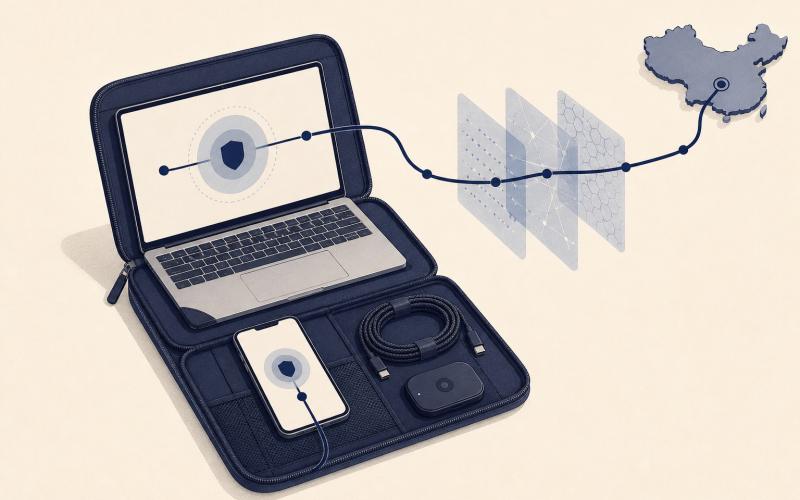
Planning a trip to China? Learn which VPN features matter, why Stealth VPN helps, how to prepare before departure, and what legal and access limits to consider.

A VPN for accessing region-locked games can change the IP location a game sees, but it won’t automatically change your Steam store region. Steam...
No logs, ever. Start with Free with ads in under a minute.