





















VPN & Privacy
VPN options for Mac compared by privacy, protocols, and protection
A Mac’s polished interface isn’t a privacy shield. Yes, MacBook Air and MacBook Pro can use a VPN, and macOS includes a client that supports L2TP,...

If someone can see your connection, they can profile it. Trackers, data brokers and strangers on public Wi-Fi are getting better at following you around the web, and the old habits for staying private are failing. You need a private browsing VPN that does more than just scramble your data. You need a provider whose legal home works in your favor. It’s exhausting to wonder who is watching every time you join hotel Wi-Fi or open your Slack workspace on an airport network. You shouldn’t have to choose between your career and your privacy while you travel.
We agree that what you do online should stay your business. This article gives you the practical tools and jurisdictional know-how to protect your data and keep your privacy. You’ll discover why the Offshore Shield of the Bahamas is a strong defense against data collection and how to keep a fast, stable connection for work, calls and streaming. We look past quick technical fixes to show how jurisdiction supports your privacy for the long term. It’s time to stop handing over your data every time you go online.
Privacy online is under pressure. A private browsing VPN isn’t just a luxury; it’s a basic tool for the modern web. Most people think a VPN is just for watching movies, but when your connection runs over shared networks, the stakes are much higher. Unencrypted traffic is an open book for anyone on the same Wi-Fi. A good VPN encrypts everything between your device and its server, and a modern protocol keeps that connection stable so your protection doesn’t drop just when you need it.
There is a big difference between being followed by ads and having your traffic exposed on an untrusted network. Ad tracking is like a shop assistant trailing you around the store. Snooping on public Wi-Fi is more like someone reading your mail over your shoulder. To stay private, you need more than a new IP address. You need a multi-layered approach that shrinks your digital footprint and protects your right to communicate privately.
Data collection has stopped being crude. In the past, trackers relied on a few cookies. Now, ad networks and data brokers combine your IP address, device fingerprint and browsing history into a detailed profile. By 2026, these profiles have become even more sophisticated, using AI to link your activity across sites and devices in real time. Staying private requires a private browsing VPN that hides your real IP address and encrypts your traffic.
Choosing a free VPN is like wearing a neon sign in a dark alley. These services cut corners because they lack the resources to maintain and upgrade their server infrastructure. If you aren’t paying for the product, you are the product. Many free services survive by logging your browsing habits and selling them to the highest bidder, which defeats the privacy you’re trying to protect. Under heavy load, free servers become overcrowded and sluggish, making VOIP calls or video streaming impossible. Reliable service requires dedicated infrastructure, and a jurisdiction like the Bahamas, with no mandatory data retention for VPN providers, adds a legal layer that free tools rarely offer.
Your data doesn’t leak in just one place; it is exposed at several points on its way across the internet. To protect it, you have to understand how it gets collected. Tracking isn’t a single wall; it’s a series of traps designed to catch your data before it reaches its destination. It is a digital ambush, and your current connection is likely walking straight into it.
DNS hijacking is the internet’s version of a lying phonebook. When you type in a URL, a compromised or badly run network can return a fake IP address, sending you to a dead end or a phishing page. Many ISPs and public hotspots also log every DNS request you make. If your private browsing VPN doesn’t use its own private DNS, you’re essentially handing a list of every site you visit to whoever runs the network.
Sometimes the problem isn’t who sees your traffic but how it’s treated. ISP-level throttling slows your connection to a crawl when it detects high-bandwidth activities like VOIP or streaming. Encrypting your traffic keeps your ISP from seeing what kind of activity you’re doing in the first place. Choosing a monthly VPN subscription gives you the flexibility to test these defenses in real-world conditions and see how a dedicated infrastructure handles these speed traps.
Attackers love DNS hijacking because it’s cheap and effective. They redirect your requests to fake pages or “site not found” errors, making it look like the service you want is simply broken. A robust VPN counters this by routing DNS requests through an encrypted tunnel to private servers. We ensure your requests stay outside your ISP’s reach, making it impossible for them to intercept, log, or redirect your traffic.
Think of unencrypted traffic as a postcard: anyone who handles it can read it. A VPN seals that postcard in an envelope. Our Advanced protocol is a modern encrypted protocol that keeps connections stable and private on hotel, airport or office Wi-Fi, so your protection doesn’t drop when the network gets busy. Combined with AES-256 encryption, your data becomes a black box that snoopers on the network can’t read.
Technology is only half the picture. You can have the strongest encryption on the planet, but if the company holding the keys can be ordered by a court to hand over records, your protection depends on that court. Many users don’t realize that their choice of a private browsing VPN is a legal decision as much as a technical one. If your provider is subject to laws that can require it to keep or share records, its privacy promises are only as strong as those laws. A tool that hides you from trackers but must hand your data to whoever has the legal power to ask isn’t the privacy tool it claims to be.
The “Five Eyes” alliance links the US, UK, Canada, Australia and New Zealand through formal agreements to share signals intelligence, so data collected in one country can be shared with another. A secure vpn for travel headquartered in these countries is bound by their data laws and can receive confidentiality orders that stop it from telling you a request was ever made. This is why we operate from the Bahamas. Outside the Five Eyes, foreign legal requests need a local court order to carry weight here, and there is no mandatory data retention for VPN providers. It is a strong Offshore Shield for anyone who values their privacy.
A “no-log” policy is just a marketing slogan unless it’s backed by jurisdictional reality. In some jurisdictions, a provider might claim it doesn’t log, but a confidential court order can require it to start at any moment. In the Bahamas, there is no mandatory data retention for VPN providers. We’ve built our infrastructure so that no activity data remains on our servers, so when a request arrives, there is simply nothing to hand over. You shouldn’t take our word for it, though. Understanding the importance of a no log vpn audit is essential for verifying that a provider’s claims match its technical reality. Real privacy requires a partner that is both technically capable and legally well placed.
A basic VPN is a paper shield. Against modern tracking, it will shred in seconds. To stay private in 2026, your private browsing VPN must be a multi-tool built for real-world networks. It isn’t enough to just hide your IP; you need strong encryption, leak protection and a connection that stays up. This requires a specific set of features that work together to keep your digital autonomy intact when the network turns hostile.
Multi-protocol support is your first line of defense. If one protocol struggles on a particular network, you can switch to OpenVPN, WireGuard or our Advanced protocol instantly. This flexibility keeps you connected wherever you are. Equally critical is Kill Switch technology. If your encrypted tunnel drops for even a millisecond, your real data leaks to your ISP. A Kill Switch acts as an emergency brake, cutting your internet entirely until the secure connection is restored. We provide access to servers in 40+ countries, giving you the power to pick the fastest, most stable location wherever you are.
Expats and travelers often make their most important calls over networks they don’t control. On hotel, airport and café Wi-Fi, your FaceTime and WhatsApp traffic shares the network with strangers. Our servers are optimized for secure VOIP calls abroad, encrypting your call traffic between your device and our network. This keeps your calls clear and private, subject to each app’s terms, so you can maintain your professional and personal life wherever you are.
Our Advanced protocol is a modern encrypted protocol built for real-world networks. It keeps your connection stable and private on hotel, airport or office Wi-Fi, where ordinary connections often drop or slow down. If you want a consistent address for work tools and logins, a Dedicated IP gives you a static IP that isn’t shared with other users. If you’re ready to protect your connection, you can start your monthly VPN subscription today and see the difference that professional-grade privacy tools make.
The web is full of trackers, and your current connection is likely unprotected. Data brokers are built to record what you see, who you talk to, and how you work. We built VPNSecure to be the ultimate private browsing VPN for the 2026 landscape. We don’t just scramble your data; we provide a jurisdictional fortress that keeps your information out of reach. You shouldn’t have to navigate the web with a target on your back. It’s time to stop being the product and start exercising your right to privacy.
Starting at just $2.99, our monthly VPN subscription offers a low-risk entry into real digital privacy. This isn’t about empty marketing promises. Because we are based in the Bahamas, outside the Five Eyes alliance, the data-sharing arrangements that apply to providers in those countries don’t apply to us. With servers in 40+ countries, you have the flexibility to pick the fastest, most stable location wherever you are. Your digital life is your own; we just provide the shield to keep it that way.
You don’t need a degree in network engineering to reclaim your privacy. Our apps are designed for speed and simplicity across PC, Mac, iOS, and Android. Once you’re logged in, the Smart Connect feature automatically analyzes your current network conditions to find the best server for your location. It selects the protocol most likely to give you a fast, stable connection. We’re so confident in our ability to keep you connected that we offer a 30-day money-back guarantee. You can test our Advanced protocol on the busiest networks without any financial risk.
Thousands of expats and travelers trust us every day to keep their communications private. Whether you’re calling family on WhatsApp or working in Slack from a hotel, we provide the reliable uptime that “free” tools lack. Supporting an independent, offshore provider is a vote for a more private internet. We answer to our customers, not to advertisers. Privacy isn’t something you should have to ask for. Start your private browsing today and experience the web on your own terms.
Privacy is a choice, and so is leaving your data exposed. You’ve seen how DNS hijacking, trackers and snooping on public Wi-Fi expose your activity. You also know that a provider’s home country decides which laws it must follow. A true private browsing VPN must be legally well placed and technically sound. By combining strong encryption and the Advanced protocol with the “Offshore Shield” of the Bahamas, you become a much harder target to track and profile.
We have protected our users’ privacy with a strict no-log policy since 2012. Operating outside the Five Eyes alliance means your privacy rests on the law we operate under, not just a corporate promise. You can protect your connection for just $2.99/mo and test our servers risk-free with a 30-day money-back guarantee. Stop handing over your data and start protecting it. The tools for your privacy are ready whenever you are.
Legal status depends entirely on your specific location. Most nations allow VPNs for corporate security and personal privacy, but the rules differ from country to country. It’s your responsibility to understand the local laws before connecting. A VPN is a powerful way to protect your privacy, but you should always check the legal landscape of the country you’re visiting.
Yes. Hotel, airport and café networks are shared with strangers, and anyone on the same network may try to watch unencrypted traffic. A VPN wraps everything in AES-256 encryption between your device and our server. Our Advanced protocol is a modern encrypted protocol that keeps that connection stable and private on hotel, airport or office Wi-Fi.
Websites often keep lists of known VPN server IP addresses and may ask for extra checks, such as CAPTCHAs, when hundreds of people share the same IP. A Dedicated IP, available as an add-on service, gives you a static, non-shared address, which can mean fewer of those extra checks. Each website’s own terms still apply.
There is no single best protocol for every network. WireGuard offers high speeds, while OpenVPN is a proven all-rounder. Our Advanced protocol is a modern encrypted protocol designed to keep connections stable and private on hotel, airport or office Wi-Fi. Being able to switch between multiple protocols ensures you can find the fastest, most reliable option on any network.
Connect to a nearby VPN server before you start the call, using a protocol suited to real-time traffic. The VPN encrypts your call traffic between your device and our server, so other people on hotel or airport Wi-Fi can’t snoop on it. This keeps your video and voice calls clear and private. Each app remains subject to its own terms and local rules.
Encryption adds a small amount of data overhead, but the impact is usually negligible on modern devices. The real speed factor is the distance to the VPN server and the quality of the provider’s network. We operate servers in 40+ countries to ensure you can always find a fast exit point near your actual location. While you might see a slight dip in raw speed, it’s a small trade-off for encrypting everything you do online.
If your connection drops without protection, your device instantly reverts to your regular network, exposing your real IP and data to anyone watching it. Our Kill Switch technology prevents this by immediately cutting your internet access the moment the VPN tunnel fails. It acts as an emergency brake, ensuring that not a single packet of unencrypted data ever leaves your device while you’re on an untrusted network.
Jurisdiction determines the legal obligations a provider has to log or share your data. Providers in Five Eyes countries can be required by confidential court orders to keep records on users. Because we’ve been based in the Bahamas since 2012, we operate outside these alliances. Our no-log policy is supported by Bahamian law, which has no mandatory data retention for VPN providers. This means that even if a foreign authority requests your data, we have nothing to hand over.
Keep reading
A Mac’s polished interface isn’t a privacy shield. Yes, MacBook Air and MacBook Pro can use a VPN, and macOS includes a client that supports L2TP,...
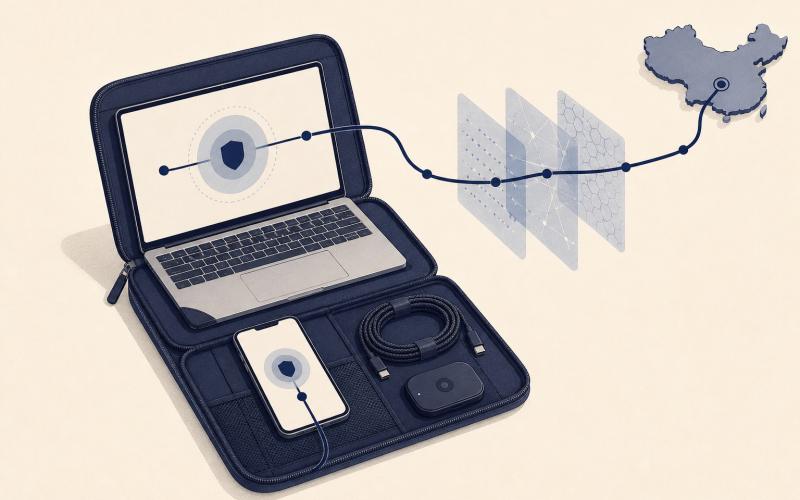
Planning a trip to China? Learn which VPN features matter, why Stealth VPN helps, how to prepare before departure, and what legal and access limits to consider.

A VPN for accessing region-locked games can change the IP location a game sees, but it won’t automatically change your Steam store region. Steam...
No logs, ever. Start with Free with ads in under a minute.